
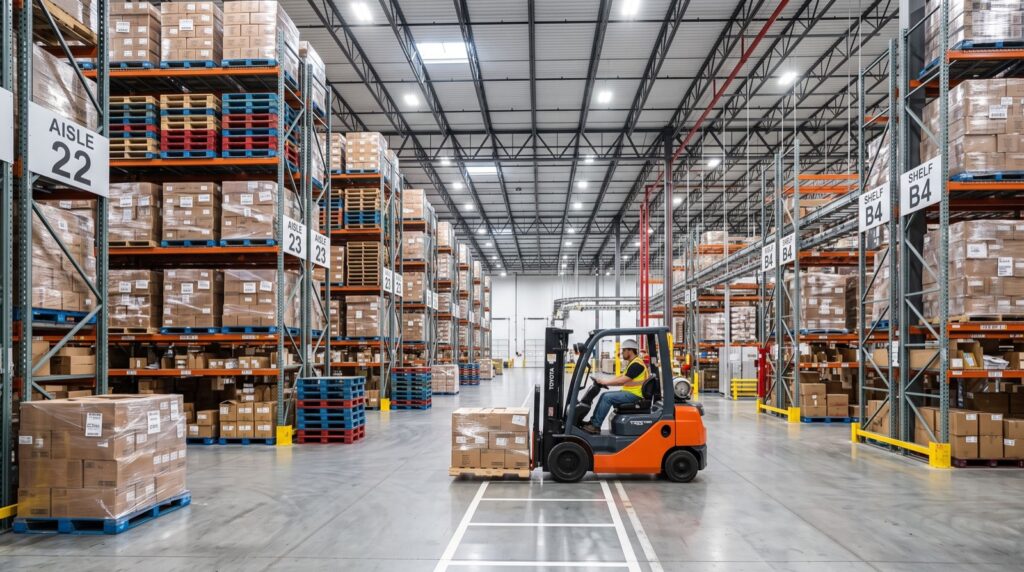
Every food business lives or dies by decisions made long before the first order of the day is fired. The rice, flour, oil, spices, canned goods, and packaging you purchased weeks ago have been sitting somewhere, and how carefully that somewhere was chosen decides whether tonight’s service runs smoothly, whether this month’s waste column looks respectable, and whether your next inspection ends in a handshake or a warning notice.
Storage is the least glamorous discipline in hospitality, which is precisely why it separates durable operations from struggling ones. This article walks through the storage practices that keep restaurants, cafes, cloud kitchens, and catering companies in Saudi Arabia compliant and efficient — from rotation systems that survive a Friday rush to the moment it makes sense to move dry goods out of the building entirely.
Storage Is a Food Safety System, Not a Shelf
Treating storage as “wherever the delivery fits” is how quality problems begin. Flour absorbs odours from cleaning chemicals kept beside it. Cooking oil degrades within reach of a sunny window. Cans rust in humid corners, and a single unnoticed pest entry point can condemn a full week of purchasing. None of these failures announce themselves at the time; they surface later as off flavours, customer complaints, or stock that has to be discarded.
The professional alternative is to run storage as a system with written rules: what may sit next to what, how far off the floor goods must be kept, which zones are reserved for chemicals and which for food, and who checks the condition of the space each week. Written rules survive staff turnover. Habits kept in one chef’s head do not.
What Inspectors Actually Look For
Municipal and food authority inspections in the Kingdom return again and again to a handful of storage fundamentals. Goods must be raised off the ground and pulled clear of walls so surfaces can be cleaned and pests have nowhere to hide. Chemicals must live in a separate, clearly labelled area. Dry ingredients must be sealed after opening, date-marked, and demonstrably rotated. Temperature-sensitive items must stay within their declared ranges, with evidence that someone monitors this rather than assumes it.
None of those requirements is difficult on its own. What sinks businesses is space pressure: when a storeroom is packed beyond capacity, goods migrate onto the floor, chemicals end up beside food because there is nowhere else for them, and rotation collapses because reaching the oldest stock takes twenty minutes. Most compliance failures are really capacity failures wearing a disguise.
Heat Is the Enemy: Why Ambient Control Matters in the Gulf
In much of the world, “room temperature” is a safe default for dry goods. In Saudi Arabia’s climate, an uncontrolled storeroom can pass forty-five degrees in summer, and at those temperatures the shelf lives printed on packaging stop meaning anything. Chocolate blooms, spices lose their volatile oils, yeast dies quietly, and cooking oils oxidise months ahead of schedule. Coastal humidity adds clumped sugar, softened packaging, and rusting tins to the list.
This is why climate-managed space has become standard practice for serious food operators on the Red Sea coast. Facilities offering Ambient Storage in Jeddah hold goods in a stable, monitored environment built for exactly this problem, so a pallet of ingredients received in June is still in usable condition when it reaches the kitchen in August. For products that do not need refrigeration but do need protection from extremes, ambient control is the difference between being stored and merely being parked.
Rotation Rules That Survive a Busy Kitchen
First-in, first-out is easy to recite and easy to abandon at ten o’clock on a busy night. Rotation systems fail when they depend on goodwill, so build the rule into the physical layout instead: shelves loaded from the back so the oldest stock is always the easiest to grab, coloured day-labels that can be read from across the room, and one designated person who dates every incoming carton before it touches a shelf.
For ingredients where expiry dates do not match arrival order — common with mixed supplier deliveries — switch from first-in-first-out to first-expired-first-out. Then close the loop with a ten-minute weekly audit: pick three random items, check their dates, and check whether anything newer sits in front of anything older. If the audit keeps passing, the system is working; if it fails, you have caught the drift while it is still cheap to fix.
When the Kitchen Runs Out of Kitchen
Growth in a food business shows up physically before it shows up in the accounts. Prep tables double as shelving, the corridor fills with packaging cartons, and seasonal equipment — Ramadan tents, catering chafers, festival signage — occupies corners the team needs every day. At that point the honest question is not how to squeeze in more racking, but whether everything in the building actually needs to be there.
Dedicated Storage for Restaurants answers that question directly: a clean, secure, appropriately managed space for bulk dry goods, disposables, spare equipment, and promotional material, held minutes away instead of underfoot. A weekly replenishment run keeps only a few days of stock on site, which frees prep space, simplifies cleaning, and makes the storeroom you kept far easier to keep inspection-ready.
Bulk Buying Without Bulk Waste
Suppliers reward volume, and for stable ingredients the discounts are genuinely attractive. But a bulk price only pays off if the goods survive storage in sellable condition, so calculate the true cost per usable kilogram, not per delivered kilogram. Twenty sacks of rice bought at a discount and stored badly can cost more than ten sacks bought at list price and stored properly.
The working rule: buy in bulk only what you have controlled space for, and let the storage plan cap the purchase order rather than the other way around. Pairing bulk purchasing with reliable off-site capacity is how mid-sized food businesses capture wholesale pricing without gambling their margins on a hot storeroom.
Choosing a Partner You Would Trust With Your Ingredients
A storage provider holding your food inputs should be vetted with the same care as a supplier delivering them. Ask to see the pest-control regime, not just hear that one exists. Ask how temperature and humidity are monitored and what happens when readings drift. Confirm access hours fit a kitchen’s schedule, since produce and dry-goods deliveries tend to arrive early. Apply the standard you would use when hiring trusted professionals in any other field: proof of process first, price second.
Finally, look at the paperwork. A facility that logs what enters and leaves, and can show you that log on request, protects you during inspections and insurance claims alike. In food, documentation is not bureaucracy — it is the evidence that your system works.
Key Takeaways
- Storage is a food safety system; run it on written rules that survive staff turnover, not on individual habit.
- Most inspection failures trace back to overcrowded storerooms, not ignorance of the rules.
- Gulf heat and coastal humidity destroy “shelf-stable” goods; ambient-controlled space preserves them.
- Build rotation into the shelf layout and verify it with a short weekly audit.
- Move bulk dry goods, disposables, and seasonal equipment off-site once they start competing with prep space.
- Vet storage providers like suppliers: pest control, monitoring, access hours, and documentation before price.
Where to Go From Here
If you run a food operation, walk your storage areas this week with fresh eyes and a notebook. Anything on the floor, anything unlabelled, anything warm to the touch, and anything you have not used in a month goes on the list. That thirty-minute exercise usually reveals both the compliance gaps an inspector would flag and the space being wasted on items that do not need to live in your kitchen.
Then fix the structural cause rather than the symptoms: define the rules, right-size what stays on site, and give the rest a proper home in managed storage. Kitchens that get ingredient storage right taste it in the food, see it in the waste figures, and feel it every time an inspector walks through the door without finding anything to write down.